

You know those days when the work just clicks? No refreshing tabs every five minutes, no checking the time, no forcing yourself to focus. You sit down for what feels like twenty minutes and suddenly two hours are gone - and the work is actually good.
That is not motivation. It is flow state.
Psychologists describe flow as a state of complete mental immersion where focus sharpens, distractions fade, and work starts to feel almost automatic. And despite how random it feels, flow is not luck. The science behind it is surprisingly consistent - and more trainable than most people think.
What Is Flow State?
In the 1970s, psychologist Mihaly Csikszentmihalyi began studying people who described losing themselves completely in their work - surgeons, chess players, artists, athletes.
He called this experience flow: a state of full absorption where effort feels effortless, self-consciousness disappears, and time distorts.
At work, flow state means you are fully inside the problem. No mental background noise. No resistance. Just clarity and forward motion.
It sounds rare. But it is more replicable than most people think.
What Is Happening in Your Brain During Flow
The neuroscience of flow is genuinely fascinating. When you enter flow, your prefrontal cortex - the part responsible for self-monitoring and doubt - goes quiet.
Researchers call this transient hypo frontality. Your inner critic steps out of the room.
At the same time, your brain releases a combination of neurochemicals: dopamine (motivation), norepinephrine (alertness), anandamide (creative pattern recognition), and serotonin.
Together, they sharpen focus, speed up processing, and make the work feel intrinsically rewarding rather than forced.
Flow State vs Hyperfocus: Not the Same Thing
These two get confused often, but they are not the same.
Hyperfocus, commonly linked to ADHD, is an intense, often involuntary lock-in on a task. It can happen with a video game or a YouTube rabbit hole for hours, with no productive output.
Flow is different. It is intentional, triggered by meaningful challenges, and it produces high-quality work.
Only one of them can be deliberately engineered.
How Long Does Flow State Last?

Research suggests a typical flow episode runs between 90 minutes and 2 hours, which maps directly onto your brain's natural ultradian rhythm.
Your brain cycles through peaks and dips in alertness throughout the day, roughly every 90 minutes - and flow tends to ride the peak.
This is part of why the 90-minute work sprint method has become a staple for high performers. It matches your biology rather than fighting it.
Once flow breaks, research estimates it takes 15 to 20 minutes to re-enter. Every notification and every tab switch is more expensive than it looks.
The Conditions Needed to Enter Flow
Flow does not arrive on command. But it does arrive reliably when the right conditions are in place.
The Right Level of Challenge
Csikszentmihalyi identified this as the central condition.
The task has to sit in a specific band: hard enough to demand your complete attention, but not so hard it tips into anxiety.
Too easy and your mind drifts. Too difficult and you freeze. That narrow middle space is where flow becomes possible.
Clear, Specific Goals
Vague intentions do not produce flow.
"Work on the project" gives your brain nothing concrete to commit to. "Complete the first two sections of the report" does.
The more defined the task, the faster your brain can settle into it fully.
Zero Interruptions
This is non-negotiable.
A single notification can collapse a flow state entirely - and as mentioned, re-entry takes time.
Phone on your desk? Distraction.
Slack tab open? Distraction.
Office door open to foot traffic? Distraction.
If you want flow, you have to protect the block. For more on why this matters, read deep work vs shallow work.
A Consistent Starting Ritual
Your brain learns through repetition.
If you begin every focus block with the same small sequence - a specific playlist, a particular seat, two minutes of stillness before you open the document - your brain starts to associate those cues with deep work.
Over time, the ritual becomes a trigger.
It costs nothing and is one of the most underused flow state tools available.
None of these conditions are complicated. But all of them require intention - and one of the biggest things that supports all four is where you actually sit down to work.
The Best Environment for Flow State
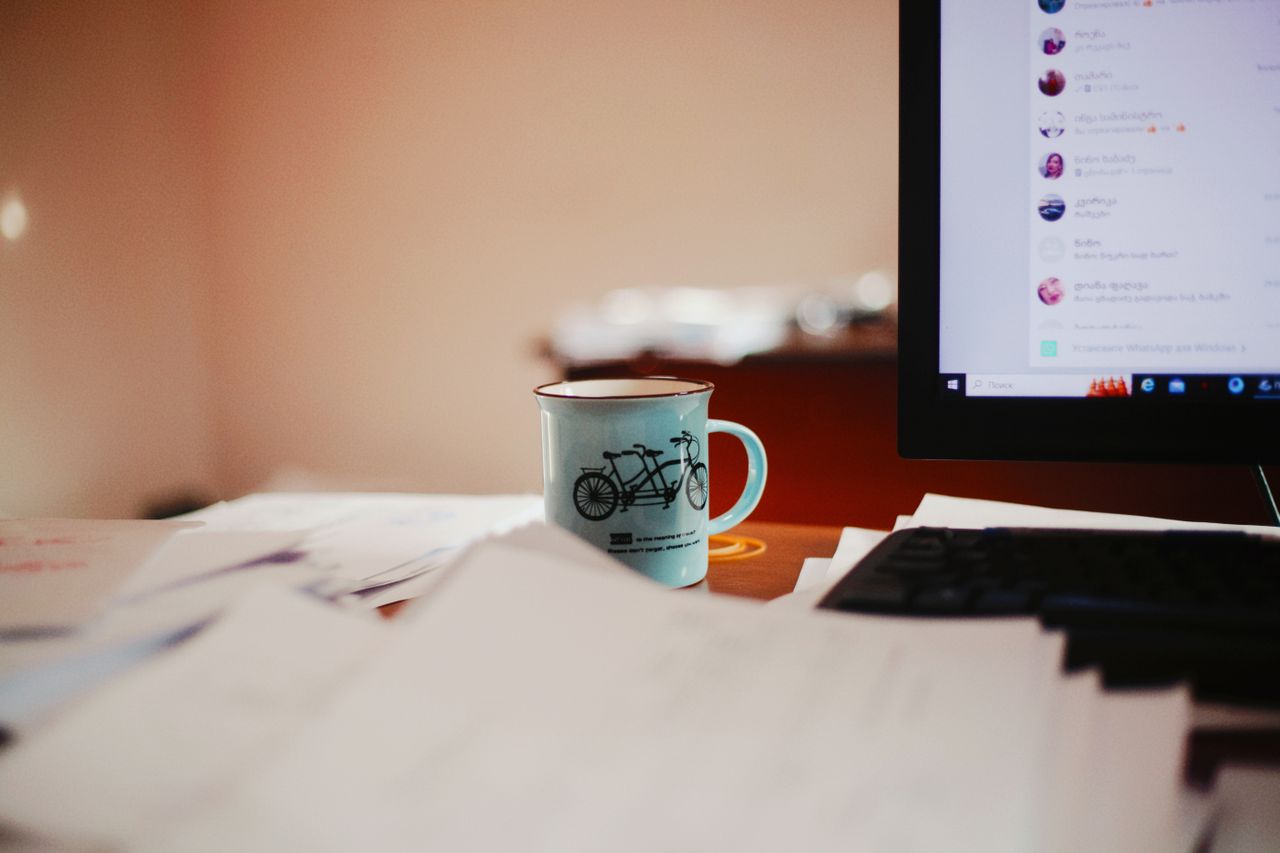
Environment is not a minor variable. It is one of the main reasons some people enter flow regularly and others rarely do.
Noise, visual clutter, and lighting all influence how quickly your brain can settle into deep focus.
Homes are difficult because they carry too many associations with rest.
Working from home works for some, but for sustained output, most people find it unreliable.
A space that signals work - structured, quiet, and designed for focus - removes friction from the whole process.
When the environment is already doing part of the job, getting into flow is faster.
How to Actually Get Into Flow State While Working
Put it all together practically:
- Schedule deep work during your peak alertness window - for most people, mid to late morning
- Define one specific task before you start - not a to-do list, one output
- Remove all exits - phone in another room, notifications off, tabs closed
- Use a starting ritual to signal your brain that the session is beginning
- Work in 90-minute blocks, then rest properly before the next one
- Do not fight a low day - some days conditions are not right; that is information, not failure
Flow is not a hack. It is a skill that becomes more consistent the more deliberately you practise it.
If you have been trying to build a flow practice and the environment keeps getting in the way, that is worth taking seriously.
superco is a coworking space in Greater Noida built around exactly the kind of conditions flow requires - quiet, structured, and without the usual interruptions of a home or a noisy cafe.
Whether you need a dedicated desk or just a few focused hours a week, the space is designed to make deep work easier to start and easier to sustain.