
.jpg)
Your workspace is doing something to your brain right now.
The hum of an AC, the quality of the light overhead, the chatter two desks away. None of it is neutral. All of it is being processed, whether you notice it or not.
The neuroscience productivity workspace conversation has moved well past standing desks and ergonomic chairs.
Researchers are now looking at the sensory environment itself, and what they're finding is fairly uncomfortable for anyone still designing offices the way they did in 2005.
How Noise Affects Focus at the Neural Level
The brain does not multitask.
What it does instead is rapidly switch attention between inputs, which costs energy and time with each switch.
Background noise triggers this switching whether you want it to or not.
How the brain processes background noise comes down to a structure called the auditory cortex, which cannot be switched off voluntarily.
It keeps scanning incoming sound for patterns, threats, or meaning.
Speech is especially disruptive because the language centers of the brain activate on recognizing words, even ones not directed at you.
Overhearing a conversation is not passive.
It pulls cognitive load in real time.
This is a large part of why open offices hurt concentration.
The design assumes proximity creates collaboration.
Neuroscience says proximity creates constant low-grade cognitive interruption, even during stretches where no one is being directly noisy.
Ambient Noise vs Silence for Productivity

The debate between ambient noise vs silence for productivity is genuinely more nuanced than most people expect.
Complete silence is not optimal for everyone.
Some research, including work published in the Journal of Consumer Research, found that moderate ambient noise around 70 decibels can promote creative thinking by introducing just enough cognitive stimulation without overwhelming the system.
Coffee shops became famous for this reason.
But the type of work matters a lot here.
For Deep Analytical Work
Tasks that require holding multiple things in mind simultaneously, like writing, coding, financial modelling, or problem solving, benefit from lower noise levels or consistent, non-lyrical sound.
The best noise level for concentration during this kind of work sits below 60 decibels.
Think of a quiet hum, not a busy canteen.
For Creative or Generative Work
A moderate level of background noise, around the 65 to 70 decibel range, can actually loosen the kind of rigid thinking that blocks creative output.
The slight distraction seems to force the brain to work with less precision, which sometimes opens up more associative, lateral thinking.
The takeaway: silence is not always the goal. The right noise level depends on what the work actually demands.
How Lighting Affects Brain Performance at Work
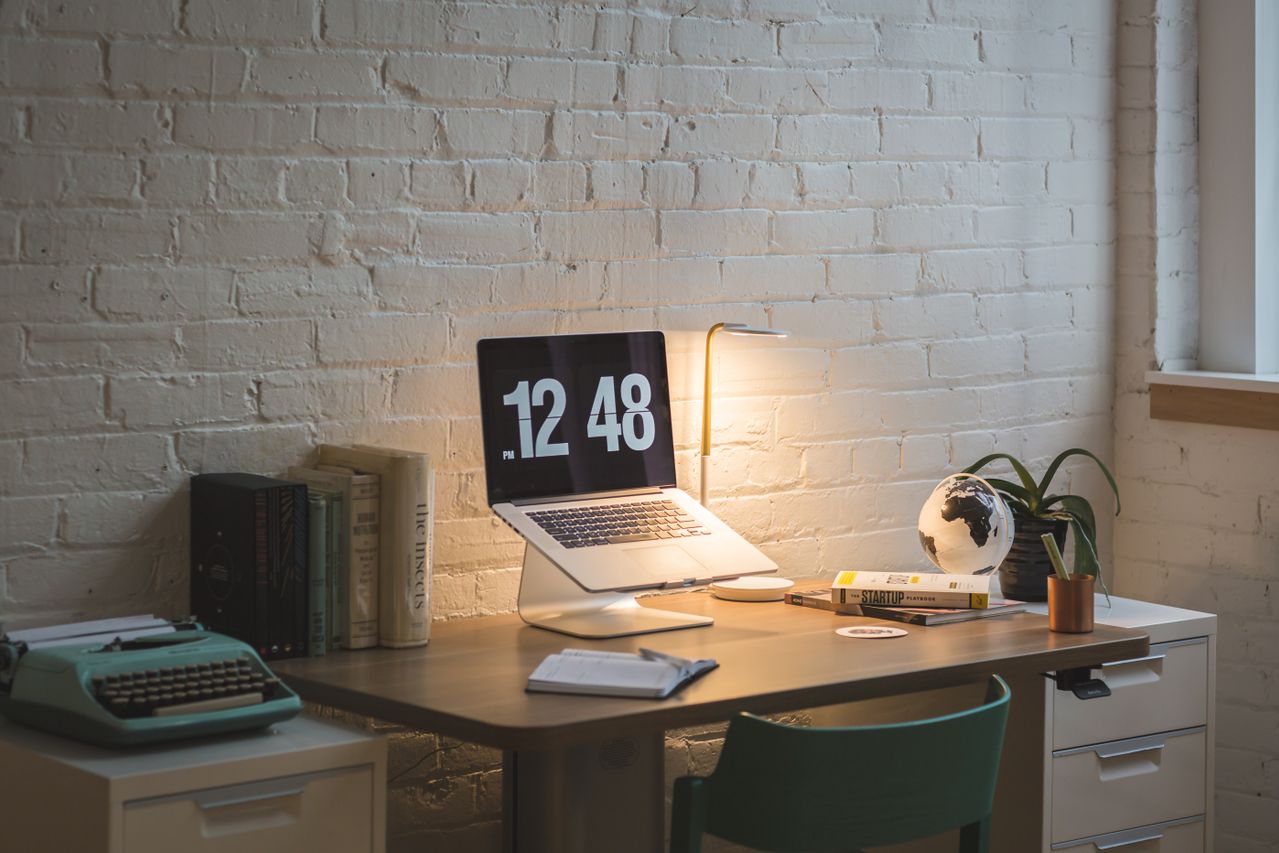
Lighting is the most underestimated variable in most workspaces.
How lighting affects brain performance at work comes down largely to its relationship with cortisol, melatonin, and your body's internal clock.
Bright, cool-toned light in the 5000K to 6500K range increases alertness by suppressing melatonin and signaling to the brain that it is time to be awake and active.
Warm, dim light does the opposite.
Most offices default to uniform overhead fluorescent lighting regardless of what time of day it is or what kind of thinking the work requires.
Optimal lighting for focus and energy changes across the day.
Morning and midday work benefits from brighter, cooler light.
Late afternoon, especially for creative or reflective tasks, can tolerate warmer tones without hurting output.
Natural light matters independently of all of this.
Studies from the American Academy of Sleep Medicine found that workers in offices with windows slept an average of 46 minutes more per night than those without.
Better sleep produces measurably better cognitive performance.
The window is not just a design preference.
It is a productivity input.
Biophilic Design and Work Performance
Biophilic design and work performance are increasingly being studied together for good reason.
The biophilic thesis is that the human brain responds positively to elements from the natural world, including natural light, plants, wood textures, water features, and views of open space.
Research from the Human Spaces Report found that workers in environments with natural elements reported 15 percent higher wellbeing and 6 percent higher productivity than those in spaces without them.
The mechanism is partly attentional.
Natural elements tend to hold attention effortlessly rather than demanding it, which allows the directed attention networks used for focused work to recover more efficiently.
Temperature and Cognitive Performance
Temperature and cognitive performance are linked more tightly than most people account for.
A Cornell University study found that when office temperature was raised from around 20°C to 25°C, typing errors dropped by 44 percent and output increased by 150 percent.
Cold offices are not more rigorous.
They are just cold.
The brain running a body that is trying to regulate its temperature has less available for the work itself.
The ideal range for cognitive work sits between 21°C and 23°C for most people.
Ideal Workspace Conditions for Deep Thinking
If you were to put all of this together, the ideal workspace conditions for deep thinking look something like this:
- Noise below 60 decibels, consistent and non-verbal
- Lighting that is bright and cool in the morning, adjustable as the day moves
- Natural light wherever possible, with views that allow the eye to rest at distance
- Temperature between 21°C and 23°C
- Green elements in the sightline, even a single plant at the desk
None of this is complicated.
Most of it just gets ignored because office design has historically been about cost per square foot, not output per hour.
The brain is not a machine that works harder under pressure.
It is a biological system that performs better when its environment stops working against it.
That is the actual science.
The rest is just furniture.