
.jpg)
Nobody puts "stumbled into a great collaboration at the coffee machine" on their growth strategy deck. But that's often exactly how it happens. The benefits of coworking networking aren't loud or obvious — they sneak up on you, usually when you're just trying to get through a Tuesday.
Let's be honest about how networking actually works
There's a version of networking most people hate. The version with lanyards and name tags and someone immediately asking what you do so they can figure out if you're useful to them. That's not networking. That's the audition.
Real professional connections — the ones that actually go somewhere — almost never start with intent. They start with proximity. Someone overhears what you're working on. You ask a stranger where they got their lunch. You end up in the same meeting room twice in a week and finally introduce yourselves properly.
Coworking spaces are built on exactly that kind of proximity. Not the engineered kind. The natural, accidental, Tuesday-afternoon kind.
What the benefits of coworking networking actually look like day to day
Here's something worth saying plainly: most people who join a coworking space don't do it to network. They do it to get out of the house, or to focus better, or because their apartment is driving them insane. The networking is a side effect. And side effects are sometimes the whole point.
1. The lounge conversation that changes direction
You're making coffee. Someone next to you is on a call that ends just as you're pouring. You say something offhand. They say something back. Twenty minutes later you've discovered they do exactly what your client keeps asking you to outsource. That's not a networking moment. It's just a conversation. Except it kind of isn't.
2. The slow-burn reputation
People notice who shows up. They notice who's consistent, who's heads-down, who takes their work seriously. Over weeks, without a single "let me tell you about what I do," a reputation forms. When someone in the space needs a recommendation, your name comes up. Not because you pitched yourself — but because you were simply, reliably there.
3. The referral you didn't see coming
A member mentions your name to their client. Not because you asked. Because they've watched you work for three months and genuinely believe in what you do. That kind of referral — the unsolicited one — is worth ten cold emails. And it only happens when you're physically present somewhere, repeatedly, around people who can vouch for you.
Growth isn't just about who you meet

People focus so much on the networking angle that they overlook the quieter ways a coworking space changes how you work — and therefore how much you grow.
1. You work harder when others are working
It's not peer pressure exactly. It's more like ambient permission. When everyone around you is focused, distraction feels out of place. You stay in the zone longer. The days feel more purposeful. This isn't a small thing — it compounds over weeks and months into measurably better output.
2. You get access to expertise you're not paying for
The person three desks down has already solved the legal thing you're stuck on. Someone in the lounge knows the tool you've been trying to figure out for a week. In a good coworking space, informal knowledge transfer happens constantly. Not in workshops. Over lunch.
3. The space signals something about you
Having a real, professional address matters more than people admit. It changes how clients perceive you before a meeting even starts. Showing up to a call from a proper workspace — not a kitchen with dishes in the background — does something subtle but real to how seriously people take you.
Not all coworking spaces deliver this equally
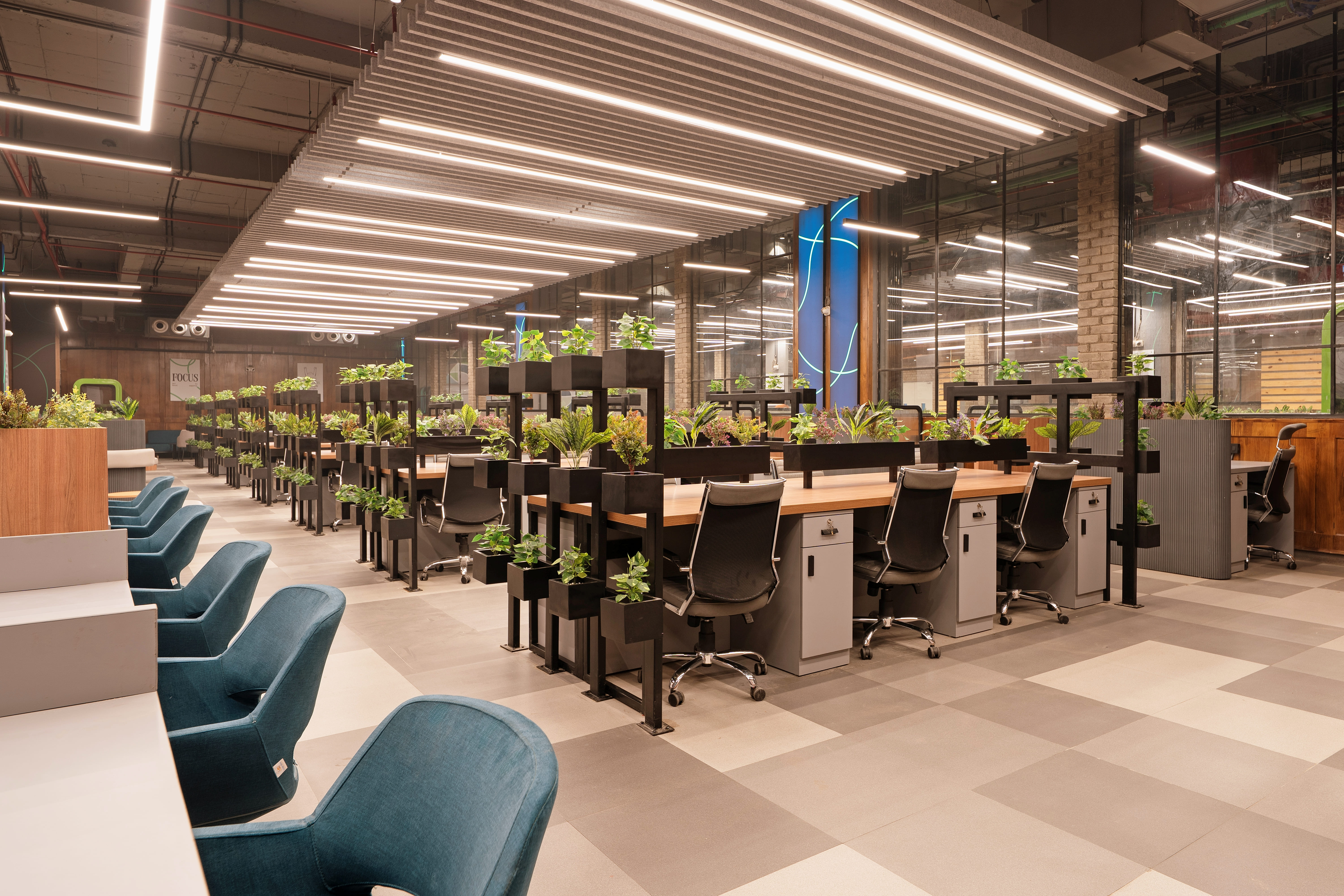
A coworking space can be just a room with desks and Wi-Fi. Plenty of them are. But that's not what creates the networking and growth benefits people talk about.
What actually matters is whether the space is designed for people to run into each other. Whether the layout creates natural gathering points — a good coffee setup, a lounge where it's okay to sit and not be heads-down, shared areas that don't feel sterile. Whether the members are diverse enough that you're likely to meet someone outside your immediate field.
- Spaces with personality attract people with personality. The vibe of a room is a filter — for better or worse.
- A mix of freelancers, founders, and creative teams in the same room creates more interesting collisions than a homogeneous crowd.
- Community events — even informal ones — give people a reason to talk beyond work. Those conversations go deeper and last longer.
- Breakout spaces matter. Some of the best conversations happen when two people are both taking a break from their screens at the same time.
This is what superco was designed around
superco, in Greater Noida West, was built with a specific belief: that the best work happens when focus and connection aren't competing for the same space.
The layout makes room for both. There are quiet workstations for the kind of deep work that needs no interruption. There are lounges where a slower pace is the point. There are meeting rooms when things get formal, focus pods when they get intense, and a full breakout zone — bowling, cricket, pool, arcade, PS5 — for when your brain just needs to reset completely.
The members at superco are freelancers, startup teams, content creators, and independent professionals. People building their own thing, on their own schedule. The kind of community where a random Wednesday can change the shape of what you're working on — not because anyone planned it that way, but because the right people were in the same room.
That's the real benefit of coworking networking. Not the contacts you collect. The ones that find you.