

Something shifted quietly over the last few years. Office chairs were left empty, resignation letters were stacked high, and an entire generation, loud, opinionated, and completely unbothered about what their LinkedIn profiles look like, started quitting traditional 9-to-5 jobs as if they were quitting a bad group project.
And honestly? They had their reasons.
Why Is Gen-Z Rejecting The Traditional 9 to 5 Model?
Gen Z didn't enter the workforce in good times. They entered in a pandemic, saw their parents work for four decades, 9 to 5, only to get burnt out, and saw the glorification of hustle culture only to have it all fall apart.
So, it's not that Gen Z is lazy. It's that they're skeptical.
This skepticism is also based on data. According to a global survey done by Deloitte, nearly 49% of Gen Z employees in the workforce say they feel stressed or burned out most of the time due to factors such as work pressure and lack of balance. This is why many Gen Z professionals are wondering if this 9-to-5 is even helping productivity or just for show.
Is Gen-Z The Most Hardworking Generation at Work?
The thing that people get wrong about Gen Z is that they are lazy, in fact, they are the most hardworking generation. Not in the way that older managers understand hard work, perhaps, but in many other ways, they are.
They work in bursts. They work hard at researching, learning, and can get just as much done in two hours of solid work as others can in a day. They're the generation that learned to make a living online, that made a career out of YouTube, that became freelancers before they ever had a traditional job. They're not anti-structure; they're just anti-traditional.
The Biggest Challenge Gen-Z Faces In Today's Workspace

The greatest challenge Gen Z faces in the workplace is not money or job opportunities, but meaning and mental health. They are the most open and anxious generation, and they talk about burnout, boundaries, and work-life balance in a way that previous generations were not taught to discuss.
What may look uncomfortable to some managers is, in fact, a message to the world. They are not accepting unsustainable work. What is uncomfortable is the hierarchy, inflexibility, and workplaces designed for robots, run by people stuck in 2003.
Which Generation Is Hardest To Work With - And Why That Question Is Wrong
“Which generation is most difficult to work with?” is the wrong question. Every generation has made this statement about the next. Boomers made it about Millennials, and Millennials made it about Gen Z, and so on.
A more pertinent question might be, “What does this generation need to do their best work?” Well, for Gen Z, the answer is actually pretty simple: flexibility, transparency, purpose, and an environment that honors their energy, not just their hours.
How Much of The Workspace Is Gen-Z - And Why It Actually Matters
How many people make up the workforce that's Gen Z? Well, Gen Z makes up approximately 27% of the global workforce. That figure will only rise. In fact, by the year 2030, Gen Z will be the dominant workforce. That means that the way in which businesses operate in terms of their workspaces and their culture is not just a nice-to-have; it's a necessity to survive.
Businesses that insist on continuing to operate in a rigid 9 to 5 environment will continue to see their best employees leave to go work in businesses that don't. It's that simple.
How Coworking Spaces Are Where Gen Z Actually Wants to Work
Gen Z doesn't hate working in person. They hate working in the wrong environment. That's why coworking spaces are becoming more and more popular among Gen Z.
The idea of coworking spaces is that the environment in which people work greatly influences how they work. For example, an environment that provides space for focus, collaboration, and breaks is more natural compared to an environment that provides cabins and closed doors.
Gen Z doesn't want to come to work and just sit at their desk. They want to come to an environment that provides space for how they think.
Is The 9 to 5 Job Dying?
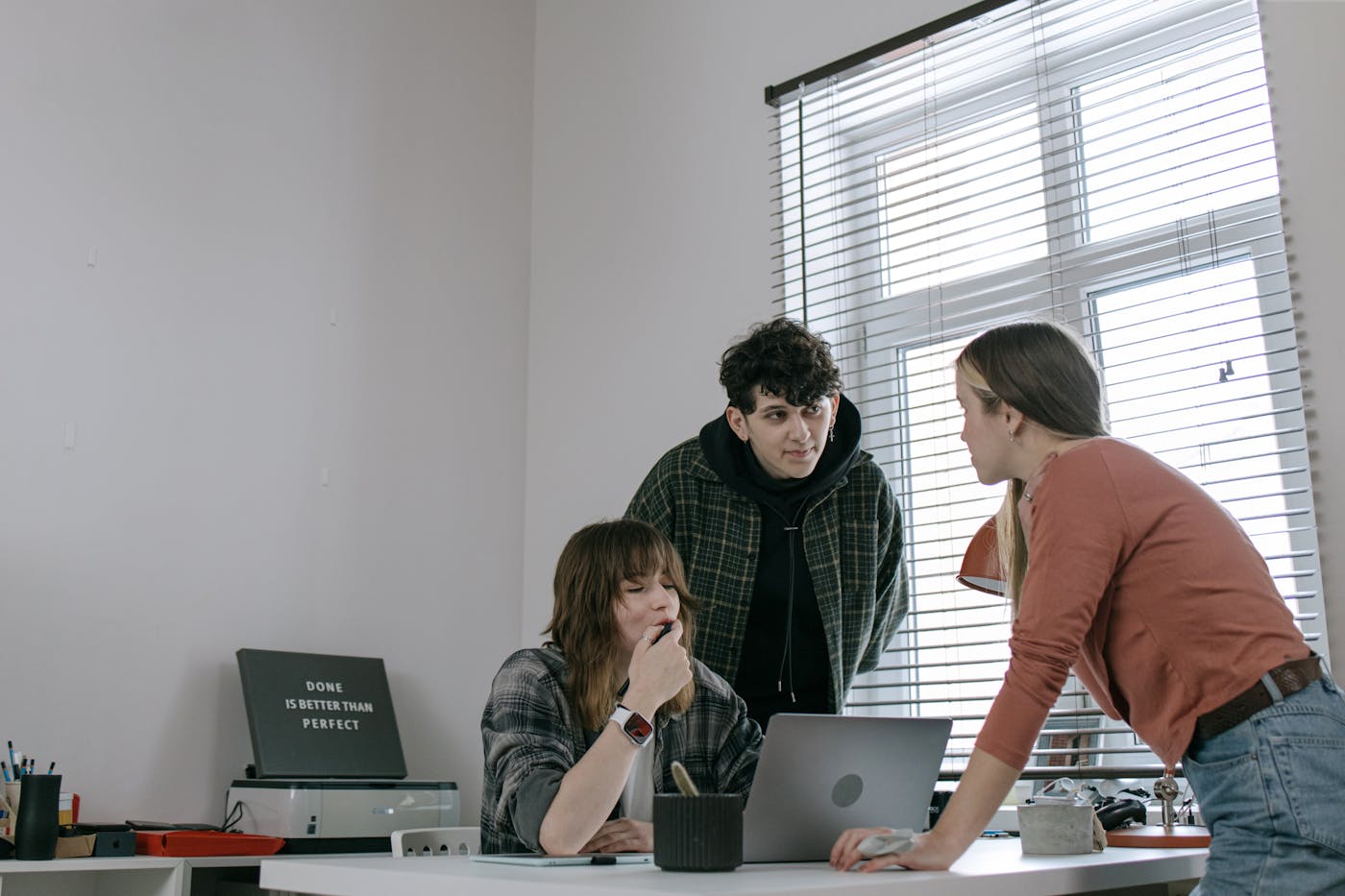
And that's the real answer to “Is the 9-to-5 dying?”: no, but the structure is. What Gen Z is rejecting isn't work; they're rejecting meaningless structure. Work for set hours simply because that's always been done.
Work commutes to offices where they'll spend half their day on video calls they could've taken from anywhere. Work dressing codes, punching in, being watched instead of being trusted.
But Is 9 to 5 Still Good For Some People?
Yes — and that's something that should be clearly stated. 9 to 5 works well when it can be supported. When someone thrives in routine, when the job requires physical presence, or when the team is built on genuine collaboration that can only be done in person, the traditional approach still works well.
The issue was never 9 to 5. The issue was making it the only solution, regardless of the job, the employee, or the work. Gen Z did not kill 9 to 5. They just stopped pretending it was ever universal.
What Does A Better Work Model Actually Look Like?
It looks like this: outcome-based, environment-aware, and human-first. It means you come in when your energy levels are high. It means you collaborate when collaboration is needed. It means you have access to space that changes with your day, space to think when you need to think, space to connect when you need to connect, and space to actually unplug and relax when your brain just needs a break from it all.
That's not a radical idea. That's just good design.